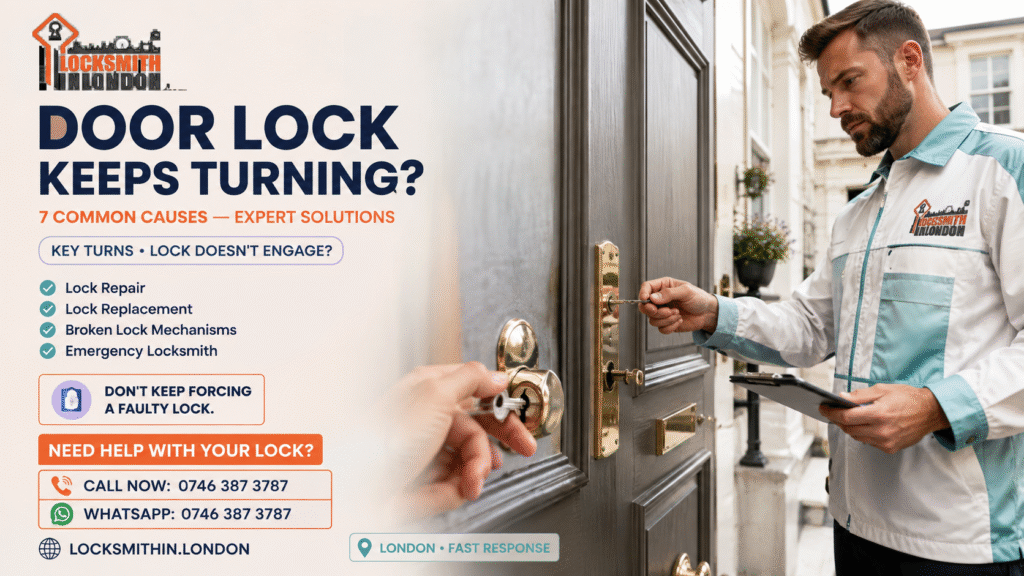
Door Lock Keeps Turning London: 7 Expert Fixes
Door lock keeps turning London home owners and businesses often face this frustrating problem when a key or internal thumbturn rotates without properly locking or unlocking the door. Although the problem can sometimes be simple, it may also indicate a damaged cylinder, worn mechanism, loose components or an alignment issue.
If your door is becoming difficult to secure, don’t keep forcing the key. A small lock problem can become a complete lock failure, particularly when the mechanism is already worn.
For professional assistance, Locksmith In London provides residential and commercial locksmith services across London.
Table of Contents
Why Is My Door Lock Turning Without Opening?
A lock should transfer the movement of the key or thumbturn into the internal locking mechanism. When that connection fails, the key may rotate without moving the latch or deadbolt correctly.
There are several possible reasons.
Sometimes the cylinder has worn internally. In other cases, the lock mechanism may have become loose, damaged or disconnected.
Door alignment can also contribute. If the door has dropped slightly, the latch or deadbolt may rub against the strike plate. This can make the lock increasingly difficult to operate.
For London properties, frequent use can also accelerate wear, especially on communal entrances, rental properties, office doors and busy commercial premises.
7 Common Causes of a Lock That Keeps Turning By Ilford locksmith
1. Worn Lock Cylinder
The cylinder is one of the most common areas to investigate.
Over time, internal components can wear down. The key may still enter and rotate, but the cylinder may no longer operate the lock mechanism correctly.
If the key suddenly starts spinning without unlocking the door, avoid repeatedly turning it.
A professional inspection can determine whether the cylinder needs adjustment, repair or replacement.
2. Damaged Internal Lock Mechanism
Your cylinder is not the only component that can fail.
The gearbox or internal mechanism may have damaged components that prevent the key movement from reaching the latch or deadbolt.
This is particularly relevant to multi-point locking systems commonly found on many modern doors.
If the handle feels unusual or the lock suddenly behaves differently, the internal mechanism may require attention.
3. Loose Lock Components
A lock can become loose through regular use.
Screws, handles, cylinders and other components can move slightly over time. That movement can affect how the mechanism operates.
However, avoid dismantling the lock unless you understand the particular lock type.
Removing components unnecessarily can make the situation worse and potentially leave the door unsecured.
4. Door Misalignment
Sometimes the lock isn’t actually the main problem.
A door that has dropped, shifted or warped can place pressure on the latch or bolt. The lock may then become difficult to turn or fail to engage correctly.
Try checking whether the door closes naturally without excessive pressure.
If you have to push, pull or lift the door to operate the lock, alignment should be investigated.
5. Worn Multi-Point Locking Mechanism
Many uPVC and composite doors use multi-point locking systems.
These mechanisms operate several locking points around the door rather than relying on one simple latch.
When a component inside the mechanism wears or breaks, the handle or key may behave unexpectedly.
A specialist locksmith can identify the high security lock type and determine which component requires attention.
6. Incorrect Key or Damaged Key
A damaged or badly worn key can also create problems.
Check whether the key is bent, cracked or visibly worn.
If you have a spare key, you can carefully compare it with the problematic key.
Don’t force a damaged key into the lock. A broken key inside the cylinder can turn a relatively simple issue into an emergency locksmith lockout.
7. Lock Has Reached the End of Its Service Life
Not every lock can be economically repaired.
Older locks may have worn internal components, obsolete parts or damage that makes replacement the more practical solution.
A professional locksmith can inspect the mechanism and explain whether a lock repair or lock replacement makes more sense.
How to Check the Problem Safely
If your door lock is behaving strangely, start with simple observations.
First, check whether the key turns normally.
Next, check whether the handle operates normally.
Then look at whether the door closes and aligns correctly with the frame.
Don’t repeatedly force the key.
Don’t spray unsuitable household products into the cylinder.
And don’t continue using a lock that feels as though it may fail completely.
If the lock works intermittently, that can be particularly frustrating because the door may appear fine one moment and refuse to operate the next.
Intermittent lock problems deserve attention before they become a complete lockout.
When You Need a 24/7 locksmith London
A professional locksmith is particularly useful when the problem involves the internal mechanism, cylinder, multi-point locking system or a door that cannot be opened or secured.
You may need professional assistance if:
- The key rotates without unlocking.
- The key spins repeatedly.
- The handle no longer operates the latch.
- The door cannot lock properly.
- The lock works only when the door is pulled or pushed.
- The key becomes difficult to remove.
- The cylinder feels loose.
- You are locked outside your property.
For help with a faulty or failing lock, contact Locksmith In London.
Emergency Locksmith London Assistance
A lock problem becomes much more urgent when you cannot secure your property or cannot get inside.
For example, imagine arriving home late in the evening and discovering that your key turns but the lock doesn’t release.
Or perhaps your business premises cannot be secured at closing time.
In situations like these, searching for 24/7 locksmith London, emergency locksmith near me or locksmith near me can help you find a local service quickly.
Locksmith In London offers emergency locksmith assistance for customers who need professional help with lockouts, faulty locks, lock repairs and lock replacements.
A Simple Rule
If the lock is becoming less reliable, don’t wait for the moment it fails completely.
Getting the problem assessed earlier can potentially prevent a much more inconvenient lockout.
Residential & Commercial Lock Problems
Lock problems aren’t limited to houses.
London businesses can experience similar issues with office doors, shop entrances, communal doors, commercial premises and internal security doors.
A landlord may discover a tenant’s lock is becoming unreliable.
An office manager may notice that an entrance lock requires excessive force.
A homeowner may find that the key rotates but the latch doesn’t respond.
Each situation requires an assessment of the particular door and locking system.
If you’re searching for an Ilford locksmith, locksmith London, or locksmith in London, explain the symptoms clearly when contacting the locksmith.
For example:
“The key turns continuously but the door isn’t unlocking.”
That information can help the locksmith understand the type of problem you’re experiencing.
Repair or Replace the Lock?
The correct solution depends on the condition of the lock.
A repair may make sense when the underlying mechanism remains serviceable and the problem can be corrected safely.
Replacement may be more appropriate when the cylinder or mechanism is badly worn, damaged or no longer reliable.
| Problem | Possible Solution | Urgency |
|---|---|---|
| Loose lock component | Adjustment / repair | Medium |
| Misaligned door | Alignment / adjustment | Medium |
| Worn cylinder | Cylinder replacement | High |
| Damaged gearbox | Mechanism repair/replacement | High |
| Broken key | Key extraction / lock assessment | High |
| Lock completely failed | Emergency locksmith service | Very High |
| Old or heavily worn lock | Replacement | Medium–High |
Why Professional Assessment Matters
Replacing a lock without identifying the underlying problem can sometimes solve only part of the issue.
For example, if the door is misaligned, installing another cylinder may not address the pressure affecting the locking mechanism.
A professional assessment looks at the door, frame, cylinder, handles and locking mechanism together.
Door Lock Repair Pricing Guide
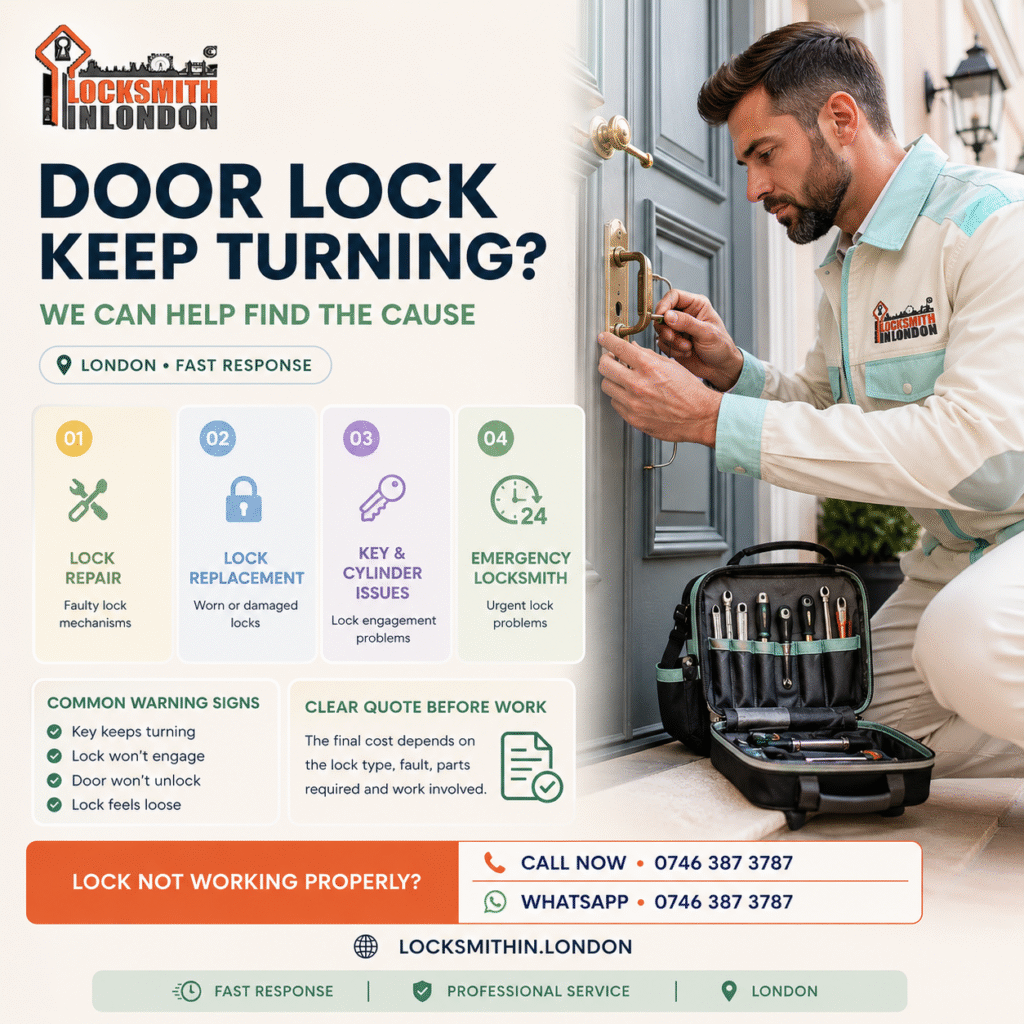
The final price depends on the lock type, access, parts required, time of day and complexity of the work.
| Service | Typical Pricing Consideration |
|---|---|
| Lock inspection | Depends on service requirements |
| Lock adjustment | Depends on mechanism and access |
| Cylinder replacement | Lock type + cylinder specification |
| Mechanism repair | Parts + labour + complexity |
| Lock replacement | Lock specification + installation |
| Emergency locksmith | Timing + location + required work |
Important: A reputable locksmith should explain the expected work and applicable costs before proceeding where reasonably possible.
For a quotation based on your specific situation:
How to Prevent Future Lock Problems
Regular attention can help identify developing problems before they become emergencies.
Pay attention when your key starts feeling different.
If you notice increasing resistance, unusual sounds or a handle that feels loose, don’t ignore it.
Also check whether your door closes squarely into the frame.
For rental and commercial properties, periodic inspection can be particularly useful because locks may experience significantly more use than a typical residential entrance.
When upgrading a lock, consider the property’s requirements rather than choosing a lock based solely on appearance or price.
Resources such as Secured by Design provide useful information about security-focused products and principles.
You can also review consumer guidance through Which? and general consumer advice from Citizens Advice.
For broader London-related information, London.gov.uk is another useful official resource.
Choosing a Locksmith in London
When selecting a locksmith, look beyond the first result you see.
Check that the business provides the service you actually require and clearly explains how to contact them.
You can also research local businesses through established directories and consumer platforms such as Yell and Checkatrade.
For locksmith industry information, Master Locksmiths Association is another useful resource.
When discussing a job, provide the location, door type, symptoms and whether the door is currently open or locked.
That makes the conversation more productive and helps establish what type of assistance may be required.




Trusted Security & Consumer Resources
For readers researching home and property security, these resources can provide additional information:
- GOV.UK — UK government information
- Metropolitan Police — London policing and crime-prevention information
- NHS — NHS information
- Trustpilot — consumer review platform
- British Standards Institution — standards information
- BSIA — security industry information
- Yale Home UK — lock and security product information
- ASSA ABLOY — access and locking solutions
- Master Lock — security products
- The AA — motoring and roadside services
- RAC — roadside services
- BBC — UK news and information
- Evening Standard — London news
FAQs
Why does my door lock keep turning without opening?
A continuously turning lock can result from a worn cylinder, damaged internal mechanism, loose components, door misalignment or a failing multi-point locking system.
Can I fix a lock that keeps turning myself?
Some simple adjustments may be possible, but internal lock repairs can be more complicated. Avoid forcing the key or dismantling the mechanism if you are unsure about the lock type.
Should I replace the entire lock?
Not necessarily. Depending on the fault, a locksmith may be able to repair or replace an individual component such as the cylinder or mechanism.
Why does my key turn but the door won’t unlock?
The cylinder or internal mechanism may no longer be transferring the key’s movement to the latch or locking points. Door alignment can also contribute to the problem.
Can a locksmith repair uPVC door locks?
Yes. A locksmith can assess many types of uPVC locking systems, including cylinders and multi-point mechanisms, and determine whether repair or replacement is appropriate.
What should I do if my lock suddenly fails?
Don’t force the key or repeatedly operate the lock. If you cannot access or secure the property, contact a professional locksmith and explain exactly what the lock is doing.
Do you provide emergency locksmith services in London?
Locksmith In London provides emergency locksmith assistance for customers experiencing lockouts, faulty locks and other urgent lock-related problems. Call 0746 387 3787 to discuss your situation.
Need Help With Your Door Lock?
A lock that turns without doing its job is more than an annoyance.
It is a warning that something inside the locking system may need attention.
If you’re experiencing this problem in London, don’t wait until you’re standing outside your property with a key that no longer works.
Fast response • Professional service • London coverage
Areas We Cover
- locksmith in Camden
- Locksmith in Westminster
- Locksmith in Loughton
- Locksmith in Chigwell
- Locksmith in London Epping Forest District
If you’re unsure whether we cover your area, simply give us a call.