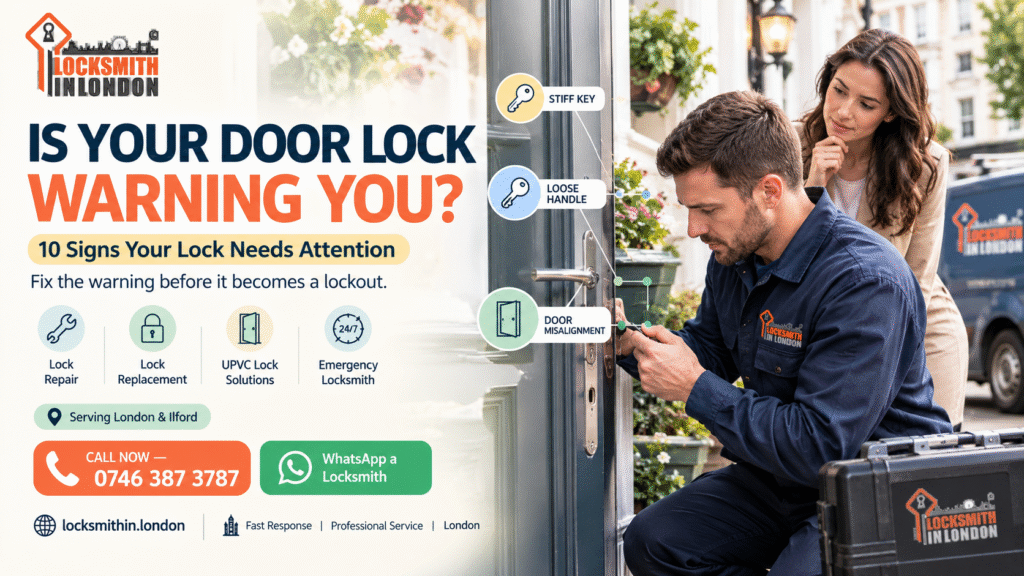
Door Lock Solution London: 10 Expert Warning Signs
Is your door difficult to lock, the key suddenly stiff, or the handle behaving differently? A door lock solution London becomes important when small changes start signalling a larger mechanical, alignment or security problem.
Ignoring these early warning signs can turn a relatively straightforward repair into a broken-key situation, emergency lockout or complete lock failure.
This guide explains 10 warning signs that your door lock jammed may need professional attention, what each symptom could mean, and when you should contact a professional locksmith in London.
Quick answer: If your door becomes difficult to lock, the key sticks, the handle feels loose, the lock makes unusual noises or the door will not properly secure, arrange a professional inspection rather than repeatedly forcing the mechanism.
Table of Contents
Why Door Lock Problems Should Not Be Ignored
A door lock is more than just a keyhole.
Depending on the door, it can involve a cylinder, latch, gearbox, handles, hinges, keeps, multipoint locking points and the door frame itself.
When one component begins to wear or move out of alignment, you may notice small changes before the lock completely fails.
For example, your key may still work but require more pressure. The door may close but need to be pushed harder before the lock engages.
These are useful warning signs.
The Metropolitan Police recommends paying attention to door security and ensuring doors and locks provide appropriate protection.
For additional home-security guidance, homeowners can also consult:
GOV.UK
Metropolitan Police – Home Security Advice
Secured by Design
10 Warning Signs Your Door Lock Needs Attention
1. Your Key Is Becoming Harder to Turn
One of the earliest signs of a developing lock problem is increased resistance.
If your key previously turned smoothly but now feels stiff, do not immediately apply more force.
Possible causes include:
1. Worn cylinder
2. Damaged or worn key
3. Door misalignment
4. Pressure against the latch
5. Internal mechanism wear
The important question is whether the problem is actually the cylinder or whether the door has moved slightly within its frame.
A professional inspection can identify the underlying cause.
2. The Key Turns But the Door Does Not Unlock
This can be particularly frustrating.
You insert the key, turn it and expect the door to open — but nothing happens.
The issue may involve the cylinder, gearbox, latch or multipoint locking mechanism.
Continuing to twist the key aggressively could increase the chance of damaging the key or internal components.
If the door is becoming unreliable, professional door lock repair London assistance can help identify the fault before it becomes an emergency.
For specialist lock fitting and repair information, see the official Locksmith In London service page:
24/7 Locksmiths in London – Lock Fitting & Repairs
3. The Door Handle Feels Loose
A handle that suddenly develops excessive movement should not be ignored.
The handle interacts with the latch or multipoint mechanism, so a loose or damaged handle can affect the entire locking process.
If the handle is becoming progressively worse, arrange an inspection before the mechanism stops operating completely.
This is particularly important for frequently used front doors, office entrances and communal doors.
4. You Have to Push, Pull or Lift the Door to Lock It
Does the door only lock when you push it firmly?
Perhaps you have to lift the handle unusually high before the key turns.
This may indicate a door alignment issue rather than a simple cylinder problem.
Possible causes include:
1. Hinge movement
2. Frame movement
3. Worn keeps
4. Door sagging
5. Multipoint mechanism alignment
6. Changes caused by regular use
Secured by Design specifically provides guidance on UPVC and multipoint locking doors and stresses correct locking operation.
5. The Lock Works Differently From Each Side
A lock that works normally from inside but behaves differently from outside deserves attention.
Likewise, if the key works one way but feels stiff or unreliable in the opposite direction, there may be a developing mechanical fault.
Never assume that because you can still open the door, everything is fine.
External entrance locks are security components. If their operation changes, getting the issue assessed early can reduce the risk of an unexpected failure.
6. Your Key Gets Stuck or Is Difficult to Remove
A key should generally enter and withdraw without unusual resistance.
If the key starts sticking, stop forcing it.
A key can potentially snap inside the cylinder if excessive pressure is applied. Once that happens, you may need broken-key extraction and potentially a lock repair or replacement.
If your key is already stuck, contact a professional rather than repeatedly twisting it.
For independent consumer information when comparing tradespeople, you can also review:
Checkatrade
Which?
Yell
7. The Lock Makes Grinding, Clicking or Unusual Noises
Your lock should not suddenly start sounding different every time you use it.
Grinding, clicking, scraping or repeated internal noises may indicate that something is wearing, moving incorrectly or struggling to engage.
Do not automatically spray random products into the mechanism.
The correct solution depends on the lock type and the underlying fault.
8. Your Door Suddenly Becomes Difficult to Close
Sometimes the lock is not actually the original problem.
The door itself may have shifted.
If you notice the door rubbing against the frame, catching at one point or requiring several attempts before the latch engages, alignment could be responsible.
A sensible door lock solution London should therefore consider the entire door assembly rather than replacing the cylinder immediately.
Temperature changes, building movement, worn hinges and repeated use can all contribute to changes in door operation.
9. The Lock Looks Damaged, Loose or Worn
Look closely at the hardware.
Warning signs can include:
1. Loose cylinder
2. Damaged fittings
3. Cracked components
4. Corrosion
5. Movement around the lock
6. Damaged escutcheon
7. Visible wear
Visible deterioration can affect both reliability and security.
The Metropolitan Police recommends considering the strength and condition of doors, frames and locks when improving home security.
You can also review broader security information from:
British Standards Institution
British Security Industry Association
10. You Keep Checking Whether the Door Has Actually Locked
This is the warning sign homeowners often overlook.
If you have started checking the lock repeatedly before leaving home, carrying multiple spare keys or worrying that the door may not secure properly, something needs attention.
Security should feel routine.
You should not have to wonder whether your front door will lock when you leave for work.
This is where a professional door lock solution London assessment can determine whether the issue requires adjustment, repair, replacement or a security upgrade.
When Should You Call a 24/7 Locksmith London?
Not every lock problem requires an emergency call.
However, you should consider urgent assistance when:
- Your key is stuck
- Your key has snapped
- The lock has stopped working
- The door cannot be secured
- You are locked out
- The door will not close properly
- The lock has been damaged
- You suspect attempted forced entry
- A business entrance cannot be secured
Locksmith In London advertises 24/7 emergency locksmith services, including lockouts, lock repairs, lock installation and replacement, key services and security assistance across London.
For urgent situations, avoid repeatedly forcing the key.
Explain whether the door is open or closed, what the key is doing, whether the handle works and whether there is an immediate security concern.
Need emergency help?
Residential and Commercial Door Lock Problems
Door lock problems affect far more than residential properties.
A faulty lock can create serious inconvenience for:
- Houses
- Flats
- Rental properties
- Shops
- Offices
- Commercial premises
- Communal entrances
- Landlord-managed properties
For businesses, an entrance that cannot be properly secured can create operational and security concerns.
Locksmith In London states that it provides residential and business locksmith services and offers lock repair, replacement and security assistance.
You can review its broader services here:
Locksmith In London – Official Website
What Does a Professional Locksmith Check?
A professional assessment should start with diagnosis, not automatically with replacement.
Depending on the door, the locksmith may inspect:
Cylinder
The cylinder is checked for wear, damage, movement and compatibility.
Latch and Gearbox
A faulty gearbox or latch can cause symptoms that appear to be a key problem.
Handles
Loose or damaged handles can interfere with locking mechanisms.
Hinges
Door movement can affect how the lock engages.
Keeps and Frame
The lock may be functioning correctly while the door and frame are misaligned.
Multipoint Mechanism
Emergency UPVC and composite doors may use several locking points. A fault in one part can affect the whole system.
Locksmith In London’s UPVC service information specifically discusses lock repair, replacement and door adjustment for malfunctioning or misaligned UPVC systems.
UPVC Door Locksmith London & Ilford
Door Lock Pricing Guide
There is no responsible single price for every lock problem.
The final cost can depend on:
- Lock type
- Door type
- Fault complexity
- Parts required
- Time of service
- Emergency call-out requirements
- Access difficulty
- Whether repair or replacement is appropriate
| Service Situation | Main Cost Factors | Recommended Approach |
|---|---|---|
| Lock adjustment | Alignment, hinges, keeps | Inspect and adjust |
| Lock repair | Internal fault and parts | Diagnose first |
| Lock replacement | Lock specification and security level | Select suitable hardware |
| Emergency lockout | Access method and time | Urgent locksmith assistance |
| UPVC door lock fault | Cylinder, gearbox, multipoint system | Professional diagnosis |
| Security upgrade | Existing hardware and desired protection | Security assessment |
Locksmith In London states that pricing can vary according to time of day, lock type and complexity, service fees and additional repair or replacement work. It also states that it aims to provide transparent pricing.
Before authorising work, ask:
What does the call-out include?
What parts may be required?
Is labour included?
Could the price change if additional damage is discovered?
Transparent communication is particularly important when you need an emergency locksmith London service.
For general consumer guidance, you can also visit:




How to Choose a Locksmith in London
Speed matters during a lock emergency, but choosing the right provider matters too.
Do not select a locksmith solely because an advert promises the cheapest possible call-out.
Check the company’s:
- Business identity
- Service area
- Website
- Phone number
- Reviews
- Pricing information
- Service descriptions
- Professional credentials where applicable
The Metropolitan Police also advises people to verify unexpected callers and check identification before allowing them into a property.
Useful research resources include:
Master Locksmiths Association
The AA
RAC
London.gov.uk
Google states that local search visibility is primarily influenced by relevance, distance and prominence, so complete business information, accurate service details and genuine reviews are important parts of a local SEO strategy.
London Door Lock Maintenance Tips
A little attention can help you spot problems before they become emergencies.
Keep your keys in good condition. If a key becomes bent, damaged or unusually difficult to use, have it checked.
Pay attention to the door itself. Rubbing, sticking, dropping or changes in closing pressure can indicate alignment problems.
For UPVC and multipoint doors, make sure the locking sequence operates correctly. Do not force the handle or key when the mechanism feels obstructed.
For security upgrades, research recognised standards and independent guidance.
Secured by Design – Door Security Guidance
ASSA ABLOY
Yale Home
Master Lock
Secured by Design advises homeowners to ensure doors are properly secured and provides specific guidance for UPVC, multipoint and other door types.
London Home Security Resources
If you’re researching your property’s wider security, these resources can provide additional information:
BBC — general UK information and consumer news.
The Standard — London-focused news and local information.
Secured by Design Crime Prevention Handbook — police-led crime-prevention information.
Metropolitan Police Door Security Advice — London-specific door-security guidance.
GOV.UK — official UK government information.
These links are provided as useful external references rather than endorsements of any particular locksmith.
Frequently Asked Questions
What is the most common reason a door lock becomes difficult to turn?
Common causes include a worn key, cylinder wear, door misalignment, pressure on the latch or an internal mechanism fault. The exact cause needs to be assessed at the door.
Should I force a stiff door lock?
No. Excessive force can damage the key, cylinder, gearbox or surrounding hardware. If resistance is increasing, stop and seek professional advice.
When should I replace a door lock instead of repairing it?
Replacement may make sense when the mechanism is badly worn or damaged, suitable repair parts are unavailable, the existing lock no longer provides the required security, or repair is not economical.
Can a locksmith repair a UPVC door lock?
Yes. A suitable professional can assess the cylinder, gearbox, handle and multipoint mechanism to determine whether adjustment, repair or replacement is appropriate.
Do I need an emergency locksmith if my lock still works?
Not necessarily.
If the door remains secure and the issue is minor, a scheduled inspection may be sufficient.
If the lock is failing, the key is stuck or you cannot properly secure the property, urgent assistance is more appropriate.
How quickly can an emergency locksmith arrive in London?
Response time depends on location, traffic, demand and the circumstances of the call.
Locksmith In London advertises 24/7 emergency availability and states that it aims to provide fast response times across London.
What should I tell a locksmith when I call?
Explain your location, whether the door is open or locked, what the key or handle is doing, whether the key is stuck and whether there is an immediate security concern.
This helps the locksmith understand the situation and prepare appropriately.
Need a Door Lock Solution London Today By Ilford locksmith?
If your lock has started behaving differently, don’t wait until the key snaps or the door refuses to secure.
The right door lock solution London depends on identifying the actual cause. Sometimes the answer is a simple adjustment. In other situations, the lock may need repair, replacement or a security upgrade.
Contact Locksmith In London provides 24/7 emergency locksmith assistance across London, including lock repair, lock replacement, lockout assistance and security services.
Don’t ignore the small signs. A faulty lock rarely becomes more reliable by itself.
Areas We Cover
- locksmith in Camden
- Locksmith in Westminster
- Locksmith in Loughton
- Locksmith in Chigwell
- Locksmith in London Epping Forest District
If you’re unsure whether we cover your area, simply give us a call.