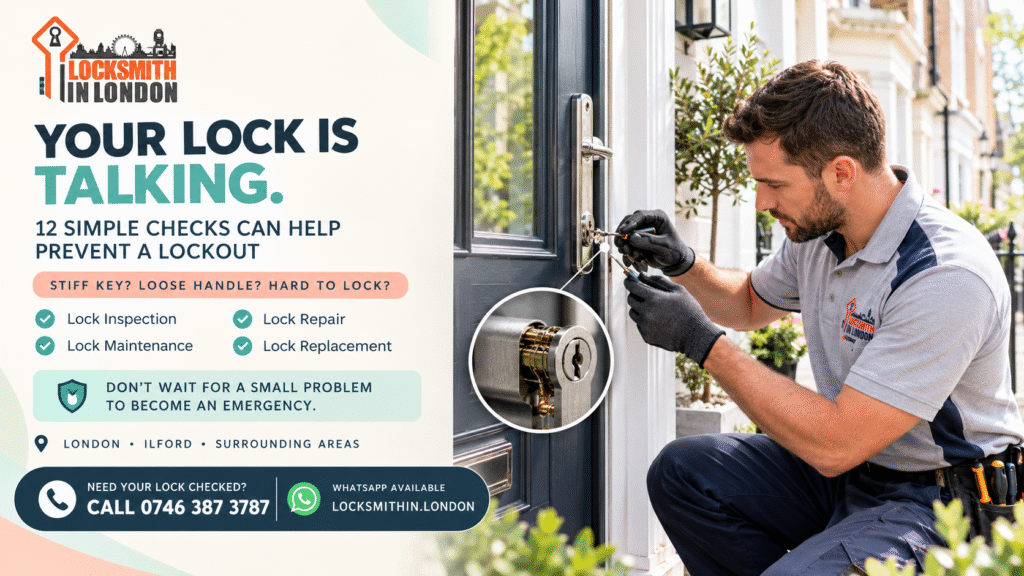
Door Lock Maintenance London – 12 Best Ways to Avoid Lockouts
Door Lock Maintenance London can help homeowners, landlords and businesses spot small problems before they become an unexpected lockout. A stiff key, loose handle, difficult-to-close door or noisy locking mechanism may seem minor, but these symptoms can indicate wear, alignment problems or a developing mechanical fault.
Regular checks do not mean dismantling your locks or attempting complicated repairs yourself. Instead, simple observation, sensible use and timely professional attention can help keep your doors operating smoothly.
If a lock has already become difficult to operate, Locksmith In London provides residential and commercial locksmith services across London, including lock repairs, replacements and emergency assistance. The company’s website states that it has served London since 2015 and provides 24/7 support.
Table of Contents
Why Door Lock Maintenance Matters
A door lock rarely announces that it is about to fail.
Instead, problems often develop gradually.
The key may start feeling slightly stiff. The handle might need extra pressure. The door may require pushing or pulling before the lock engages properly.
These warning signs are worth investigating.
The Metropolitan Police advises residents to make sure doors and windows are properly secured and notes that modern multi-point and uPVC doors need to be operated correctly for their locking systems to engage.
Regular checks can therefore help you identify problems before they become an emergency.
For additional security information, homeowners can consult:
Metropolitan Police home security advice
Secured by Design
GOV.UK
Which? home insurance guidance
12 Simple Door Lock Maintenance Tips
1. Test Your Key Before It Becomes Difficult
Insert your key gently and turn it normally.
Do not force it if it suddenly feels unusually stiff, catches halfway or requires excessive pressure.
A key that becomes progressively harder to turn can indicate a worn key, euro cylinder issue, alignment problem or internal mechanism fault.
If the problem keeps returning, professional inspection is safer than repeatedly forcing the key.
2. Check Whether the Door Closes Correctly
Your lock and door work as a system.
If you have to lift, push or pull the door every time you lock it, the problem may not be the lock itself.
Door movement, frame alignment, hinges and the locking points can all affect operation.
A professional locksmith can determine whether adjustment or a component repair is appropriate.
This is particularly important for uPVC and composite doors with multi-point locking systems.
3. Keep an Eye on Stiff Handles
A stiff handle should not automatically be ignored.
If the handle becomes harder to operate than usual, stop and investigate rather than repeatedly forcing it.
The underlying problem could involve the gearbox, locking mechanism, door alignment or another component.
Current London lock-repair guidance from Checkatrade identifies stiff keys, worn components and misaligned uPVC or composite doors among common lock problems.
4. Do Not Use Excessive Force
One of the simplest maintenance rules is also one of the most important:
Do not force a lock that is resisting.
Forcing a key can cause it to bend or snap.
Forcing a handle can place unnecessary pressure on the internal mechanism.
And attempting to force a jammed door can turn a manageable repair into an emergency.
If something suddenly feels different, stop using excessive pressure and arrange an inspection.
5. Inspect Your Keys
Keys wear down over time.
Look for obvious signs of damage, bending or excessive wear.
If a key has become difficult to insert or turn, compare it with a spare key if you have one.
If the spare works smoothly while the original does not, the key itself may be the issue.
If both behave poorly, the lock mechanism deserves attention.
6. Check the Lock for Visible Damage
Take a few seconds to look at the exterior hardware.
Check for:
- Loose screws
- Damaged escutcheons
- Movement around the cylinder
- Cracked handles
- Bent components
- Signs of corrosion
- A cylinder that appears incorrectly positioned
You do not need to dismantle anything.
The purpose is simply to notice changes before they become serious.
For wider home-security guidance, see:
National Protective Security Authority
Citizens Advice
London.gov.uk
7. Keep the Door and Frame Aligned
Alignment problems are easy to overlook.
A door that has dropped slightly may cause bolts, hooks or latches to rub against the keep.
You may notice this when locking becomes easier if you push or lift the door.
Instead of immediately replacing the entire lock, have the door and locking mechanism assessed.
Sometimes the appropriate solution is an adjustment rather than a complete replacement.
8. Pay Special Attention to UPVC Doors
UPVC doors often use multi-point locking systems involving several locking points.
The handle, gearbox, cylinder, hooks and other components need to work together.
If the handle becomes stiff, the key catches or the door refuses to lock, do not keep forcing it.
The issue could develop into a complete lockout.
For London property owners, our existing guide on UPVC lock problems provides further information:
UPVC Door Lock Repair Ilford
That page also explains common problems such as worn mechanisms, alignment issues and cylinder faults.
9. Check Your External Doors More Often
Not every door receives the same level of attention.
Your main entrance, rear door, side entrance, garage access and other external doors deserve particular attention because they directly affect property access.
For homeowners, this can form part of a wider home-security routine.
For landlords, regular checks can also help identify problems before tenants experience a lockout.
For general security standards and product guidance, consider:
British Security Industry Association
Master Locksmiths Association
Yale Home UK
ASSA ABLOY
Master Lock
10. Do Not Ignore a Repeated Lock Problem
A one-off problem and a recurring problem are different.
If the key sticks once, monitor it.
If it happens repeatedly, investigate.
Repeated symptoms can include:
- Key becoming stiff
- Lock taking several attempts
- Handle becoming loose
- Door needing extra pressure
- Locking points catching
- Key failing to turn fully
These are useful clues for a professional locksmith.
Our London lock-repair service explains that diagnosing the underlying fault can sometimes avoid unnecessary full replacement.
Lock Repair Central London
11. Consider Security Upgrades When the Lock Is Old
Maintenance is not only about keeping an old lock operating.
Sometimes it is also about deciding whether the existing security remains appropriate.
If you have recently moved home, lost keys, experienced attempted forced entry or inherited an old locking system, consider having the property assessed.
For euro-cylinder doors, the Metropolitan Police currently recommends 3-star euro cylinders meeting TS007 when changing locks, highlighting resistance to common attack methods such as snapping, drilling and bumping.
For British Standard mortice locks and wider security requirements, product selection should match the door, property and applicable insurance requirements.
12. Keep a Locksmith Contact Before You Need One
This may sound obvious, but it can make a major difference during an emergency.
When someone is locked outside at midnight, they rarely have time to research every available locksmith.
Save a reputable local provider’s number in your phone before an emergency occurs.
Locksmith In London advertises 24/7 emergency support, residential and business services, lock repairs and replacements across London.
When Maintenance Is No Longer Enough
Good maintenance cannot repair a component that has already failed.
There are several situations where professional assistance makes more sense.
Your Key Keeps Getting Stuck
A recurring key problem should be investigated before the key snaps inside the cylinder.
Your Door Will Not Lock Properly
A door that cannot be secured reliably deserves immediate attention, particularly if it is an external entrance.
The Lock Is Damaged
Visible damage, loose hardware or a damaged cylinder can compromise normal operation.
The Mechanism Is Failing
If the lock works intermittently, the internal mechanism may be approaching failure.
You Have Lost Your Keys
If lost keys could be connected to your address, replacing or reconfiguring the relevant lock may be appropriate.
If you are already experiencing one of these problems, our guide to lock replacement explains common situations where replacement may be appropriate.
Lock Replacement London
UPVC Lock Maintenance: What London Homeowners Should Know
UPVC doors require particular attention because their multi-point mechanisms contain several moving components.
Do not repeatedly slam the door or force the handle upward if the mechanism feels different.
Instead, check whether the door closes squarely and whether the handle operates normally.
If the lock becomes stiff, the key catches or the mechanism refuses to engage, professional diagnosis can identify whether the problem involves the cylinder, gearbox, handles, alignment or another component.
If you are searching for a locksmith in London because your UPVC door is becoming difficult to secure, early intervention may help prevent an inconvenient lockout.
Lock Maintenance for Landlords
Landlords have another reason to pay attention to locks.
A small fault between tenancies can become an urgent call when a tenant cannot enter the property.
During property inspections or changeovers, check:
- Main entrance locks
- Rear and side doors
- Window locks
- Garage locks
- Communal access points
- Spare keys
- Signs of forced entry
- Difficult or inconsistent locking
If a tenant reports that a lock is becoming difficult to operate, do not automatically treat it as a minor inconvenience.
A professional assessment can determine whether adjustment, repair or replacement is appropriate.
Commercial Door Lock Maintenance
Businesses face a different set of access requirements.
Offices, shops, warehouses and other premises may have multiple doors, restricted areas, staff access and master-key arrangements.
A failed entrance lock can disrupt employees and customers.
Regular checks can help property managers identify developing problems before they become an emergency.
A commercial locksmith london service may also assist with repairs, replacements, access-control hardware and security upgrades.
For industry information, you can also consult:
British Security Industry Association
Emergency Locksmith London Support
Maintenance is designed to prevent emergencies.
However, locks can still fail unexpectedly.
If you are already locked outside, a key has snapped, the door will not secure or a locking mechanism has suddenly failed, do not keep forcing it.
Professional assistance can help diagnose the problem and determine whether repair, replacement or non-destructive entry is appropriate.
Locksmith In London advertises 24/7 emergency assistance and services for residential and business customers across London.
Need immediate assistance?
Door Lock Maintenance Pricing Guide
Routine maintenance costs vary because some properties only need an inspection or adjustment while others require replacement components.
As a current London benchmark, Checkatrade reports typical London lock-repair prices of £89–£162, with an average of £119, while its 2026 UK guide reports a London average locksmith price of £163.47. These figures are market benchmarks rather than fixed prices.
| Service | Indicative London Consideration |
|---|---|
| Lock inspection | Depends on provider and whether repair follows |
| Lock adjustment | Depends on door and mechanism |
| Lock repair | London benchmark £89–£162 |
| Standard lock replacement | Depends on lock specification |
| High-security upgrade | Depends on product and fitting |
| Emergency locksmith callout | Usually higher outside normal hours |
The final price can depend on the lock type, parts required, property access, time of day and complexity of the fault.
A professional quote should explain what needs to be repaired or replaced before significant work begins.
For current market pricing information, see:




How to Choose a Locksmith Near Me
Searching for a locksmith near me is easy.
Choosing the right service requires a little more care.
Look for clear contact information, relevant experience, transparent pricing and evidence of professional service.
Consumer platforms can help you research providers and compare customer feedback:
Checkatrade
Trustpilot
Yell
Master Locksmiths Association
The company website for Locksmith In London states that its service provides fast response, residential and business locksmith support and 24/7 emergency availability. Its emergency service page also states that the service is fully insured.
Do not rely on a single claim or badge. Check the service details, ask what work is required and confirm the expected cost.
Frequently Asked Questions
1. How often should I check my door locks?
There is no universal schedule for every lock. A sensible approach is to check external doors periodically and whenever you notice a change in key movement, handle operation, alignment or locking behaviour.
2. What is the first sign of a failing lock?
Common warning signs include a stiff key, grinding sensation, loose hardware, inconsistent locking or a door that needs extra pressure to secure.
Should I lubricate my door lock?
It depends on the lock manufacturer’s instructions and the lock type. Avoid randomly applying household oils because unsuitable products can attract dirt or affect certain mechanisms. If you are unsure, ask a locksmith or follow the manufacturer’s maintenance guidance.
4. Can a locksmith repair a lock instead of replacing it?
Often, yes. The correct solution depends on the fault, lock condition and availability of suitable replacement components. Professional diagnosis can determine whether adjustment or repair is practical.
5. When should I replace a door lock?
Replacement may be appropriate when a lock is badly damaged, repeatedly failing, unsuitable for the door, compromised after lost keys or no longer provides the security level required.
6. What should I do if my key becomes stuck?
Do not force it. Excessive pressure can snap the key or damage the cylinder. If the problem persists, contact a professional locksmith for assessment.
7. Can I get emergency locksmith help in London?
Yes. Locksmith In London advertises 24/7 emergency locksmith assistance across London for issues including lockouts, repairs and replacements.
Prevent the Lockout Before It Happens
The easiest lockout to deal with is the one you prevent.
A few minutes spent checking your keys, handles, door alignment and locking behaviour can reveal problems before they become urgent.
More importantly, do not ignore repeated warning signs.
A lock that is becoming progressively harder to operate may be telling you that something needs attention.
If you need professional Door Lock Maintenance London support, Locksmith In London can assess the condition of your locking system and advise whether adjustment, repair, replacement or an upgrade is appropriate.
Fast response • Professional assistance • 24/7 emergency support
Areas We Cover By Locksmith In London Ltd
- locksmith in Camden
- Locksmith in Westminster
- Locksmith in Loughton
- Locksmith in Chigwell
- Locksmith in London Epping Forest Distric
If you’re unsure whether we cover your area, simply give us a call.